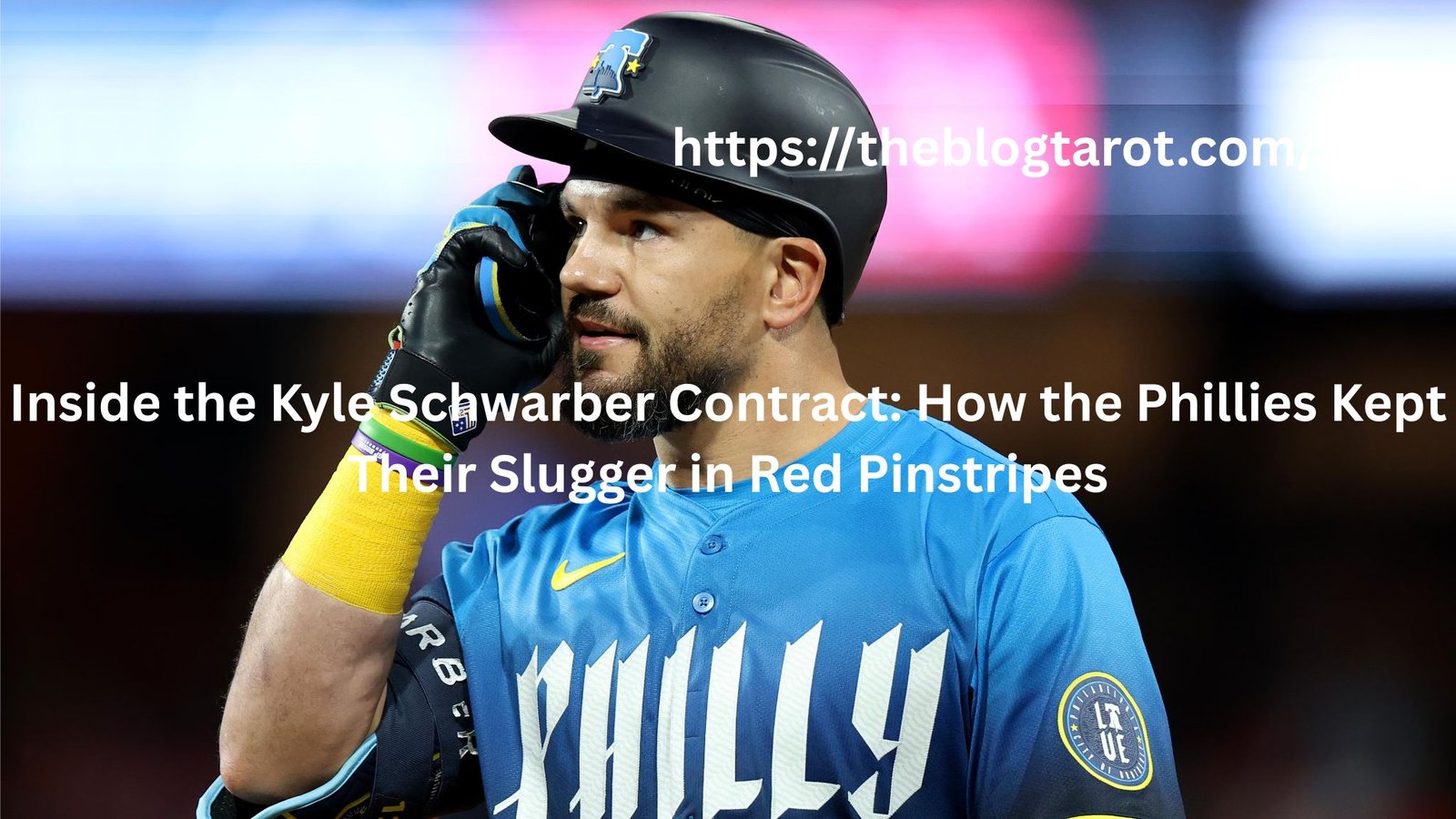
Inside the Kyle Schwarber Contract: How the Phillies Kept Their Slugger in Red Pinstripes
Few offseason storylines in recent memory carried as much weight for the Philadelphia Phillies as the future of their power-hitting designated hitter. After months of speculation, multiple suitors, and a frenzied free agency period, the Kyle Schwarber contract finally came together, and it reshaped the outlook of the Phillies roster for years to come. The deal not only kept one of baseball’s most feared sluggers in Philadelphia, but it also became one of the most talked-about agreements of the entire offseason.
How the Deal Came Together
The path to a new agreement was not simple. Kyle Schwarber Contract entered free agency as one of the most sought-after bats on the market, and several teams made serious efforts to lure him away from Philadelphia. Reports indicated that Baltimore extended a competitive offer, while his hometown franchise, Cincinnati, also made a push to bring the slugger back to the region where he grew up. Even Pittsburgh, a franchise not typically associated with big spending, put together an ambitious proposal to change the direction of its roster.
Despite all of this outside interest, the situation ultimately came down to loyalty and comfort. Schwarber had made it known that Philadelphia remained his preferred destination, and ownership was equally determined not to let him walk. After a period of back-and-forth negotiation, including several offers with varying lengths of years and total values, the sides settled on terms late one night during the Winter Meetings. The finalized agreement locked Schwarber in as a Phillie for the next half-decade.
Breaking Down the Financial Structure
The finished agreement is a five-year commitment worth $150 million, carrying an average annual value of $30 million per season. This places it among the largest Kyle Schwarber Contract ever awarded to a player whose primary role is designated hitter, trailing only a small handful of similar deals across the sport. The structure includes a $15 million signing bonus, split into two separate payments during the first year of the deal.
Because of how the signing bonus is distributed, Schwarber’s actual base salary in the opening season is lower than in the years that follow. His salary increases substantially for the remaining four seasons of the agreement, evening out the overall cost over the life of the deal. For luxury tax purposes, however, the calculation is based on the average value each year, meaning the club absorbs the full $30 million charge against the competitive balance tax regardless of how the actual cash payments are scheduled.
Beyond base compensation, the agreement includes performance bonuses tied to individual awards, as well as a charitable component that requires the player to contribute a portion of his earnings to team-affiliated community programs each season. These additions are relatively modest compared to the overall size of the deal, but they reflect the kind of detailed structuring that has become common in modern baseball agreements.
What This Means for Service Time and Player Rights
One interesting wrinkle tied to this arrangement involves player rights that kick in partway through the Kyle Schwarber Contract. By the conclusion of the first season under the new deal, Schwarber will have accumulated enough time with a single organization to qualify for full veteran no-trade protections under league rules. In practical terms, this makes any hypothetical trade scenario almost entirely moot, since the organization has shown no inclination whatsoever to move on from him regardless of formal protections.
Why the Phillies Prioritized Retention
From a roster-construction standpoint, the decision to keep Schwarber made sense on multiple levels. He had just wrapped up one of the best offensive seasons of his career, finishing near the top of the league Most Valuable Player voting after leading all of the National League in home runs and driving in more runs than any other hitter in baseball. His combination of power, plate discipline, and postseason experience made him a difficult player to simply let walk away, even with questions about his age and defensive limitations considered.
There was also a clubhouse element to the decision. Schwarber has long been viewed as one of the more respected voices in the Phillies locker room, and the front office made clear that continuity mattered just as much as raw production. Losing a player of his stature to a division rival or another contender would have created a difficult narrative for a franchise that has positioned itself as a perennial championship contender.
Payroll Implications Going Forward
Committing this level of money to a single player naturally affects overall roster flexibility. With this contract added to an already substantial group of long-term commitments, the organization now sits comfortably above the luxury tax threshold, a reality ownership appeared willing to accept given the stakes involved. It does mean that future additions may require more creative roster management, including trades or younger, cost-controlled players filling out complementary roles.
Final Thoughts
The finalized agreement stands as one of the defining moves of the offseason, both for what it says about the player’s value and for what it reveals about the organization’s broader roster-building approach. Rather than allow uncertainty to linger, the front office moved decisively to secure its slugger for the foreseeable future. Whether the investment pays off over the full length of the contract remains to be seen, but for now, the terms of the Kyle Schwarber contract have given Phillies fans plenty of reason to feel confident heading into the years ahead.