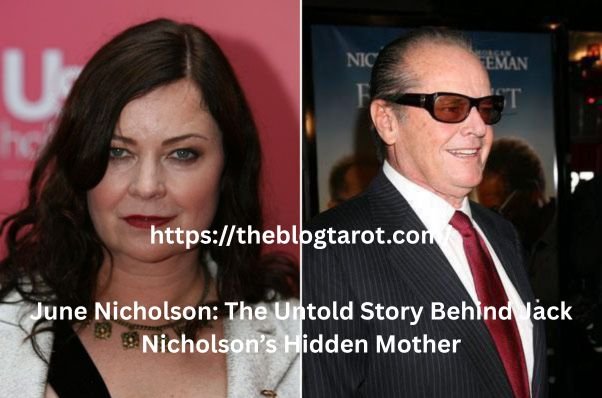
June Nicholson: The Untold Story Behind Jack Nicholson’s Hidden Mother
For most of her life, June Nicholson was known to the world, and even to her own son, as someone she was not. She lived quietly, worked as a dancer and stage performer, and died long before the truth about her identity became public. Her story is not one of scandal but of a difficult personal choice made under the pressures of a different era, and it remains one of the most talked-about family secrets in Hollywood history.
Early Life and Background
She was born June Nicholson in 1918, into a family that would later become inseparably linked to American cinema, though none of them could have predicted it at the time. Her stage name was June Nilson, which she used while working as a showgirl and dancer, a career path that was glamorous but precarious for a young woman of her generation. Details about her childhood and upbringing remain sparse, since she never achieved fame in her own right and was not the subject of press coverage during her lifetime. What is known comes largely from research conducted decades later, after her connection to a famous son had already been established.
Becoming a Mother at a Young Age
At eighteen, she became pregnant while unmarried, a circumstance that carried enormous social stigma in the late 1930s. The identity of the father has never been settled with full certainty; some accounts point to a man she briefly married under a stage name, while others suggest the matter was never entirely clear even within her own family. Faced with the judgment that unwed motherhood invited at the time, her parents made a decision that would shape the rest of her life and the life of her child. They agreed to raise the baby as their own son, while she would be presented publicly as his older sister.
This arrangement meant that the boy grew up calling his grandmother “mother” and his actual mother “sister.” It was a private family decision, not unusual for the period, when many families quietly restructured their public identities to avoid the consequences of an unplanned pregnancy. She continued to live nearby, watching her son grow up in a role that concealed her true relationship to him.
A Quiet Life Away From the Spotlight
Unlike the son she raised as a sibling, she never experienced fame. She continued working in entertainment in a modest capacity, and her personal life outside that early decision is not well documented. Biographers who have since tried to piece together her story note that the historical record is thin, consisting mostly of marriage certificates, brief professional mentions, and recollections gathered long after her death. She died in 1963 from cancer, having never revealed the truth to her son. Her own mother, who had raised the boy as her child, died several years later, in 1970, also without disclosing the secret.
The Revelation Years Later
The truth did not surface until 1974 June Nicholson, when researchers working on a magazine profile of her now-famous son uncovered marriage and birth records that did not match the family’s long-standing story. When confronted with the information, a surviving relative eventually confirmed what the documents suggested: the woman he had believed was his sister had, in fact, been his mother, and another relative he had thought of as a sister was actually his aunt. By that point, both women who could have explained the decision firsthand had already passed away. As a result, he had no opportunity for a direct conversation about it.
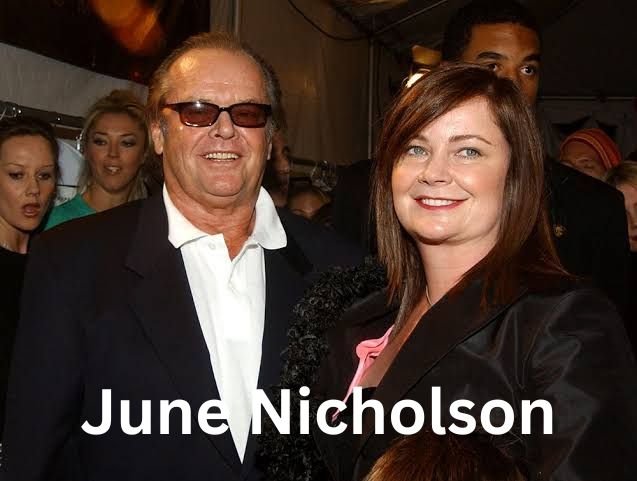
He later described the discovery as dramatic but not devastating, noting that he was already well established in who he was by the time he learned the truth. Rather than expressing resentment, he spoke with admiration about the discipline it must have taken for two women to keep such a significant secret for decades. That reaction has become almost as well known as the secret itself and is often cited as an example of grace in the face of an unusual, emotionally complex revelation.
Why Her Story Still Draws Attention
Interest in her life persists largely because of her connection to one of the twentieth century’s most celebrated actors. Her story illustrates how personal circumstances that once seemed shameful and were accordingly hidden can later be viewed with more sympathy and historical curiosity. It also reflects broader patterns of the era June Nicholson, when families frequently made private arrangements to protect a young, unmarried mother from public judgment, sometimes at the cost of lasting honesty within the family itself.
It is worth approaching her story with caution, since much of what circulates about her draws on secondhand recollections rather than firsthand documentation. The confirmed facts are relatively limited: her birth year, her stage career, her son’s birth, the family’s decision to conceal her role, and the eventual revelation of the truth after her death. Beyond these points, many details remain speculative, and responsible accounts tend to avoid filling those gaps with invented drama.
A Legacy Defined by Silence and Sacrifice
She never sought recognition and never lived to see how her story would eventually be told. Yet her decision, made under difficult circumstances at a young age, shaped the early life of a man who would go on to become one of the most acclaimed performers in film history. Her name continues to appear in biographies and retrospectives not because of anything she achieved publicly, but because of the quiet sacrifice she made and the secret she carried until the end of her life. In that sense, her story remains a reminder that even figures who stayed out of the spotlight can leave a lasting mark on history through the people they raised and the choices they made in silence.